

Consumer Products
Built For Consumer Businesses That Scale Faster Than Their Back-End Systems Can Absorb.
Consumer products companies rarely struggle with demand.
They struggle with what demand breaks — distribution complexity, margin pressure, working capital strain, and fragmented financial visibility.
FundVice works with consumer businesses to build finance functions, capital discipline, and scalable operating structures that support growth across channels, geographies, and retail ecosystems.
In consumer products, growth is visible. Control is not.
Consumer businesses are built to grow outward — across channels, geographies, and customer segments — and the modern distribution landscape makes that expansion easier than ever before. A brand can be on its own D2C platform, three domestic marketplaces, a wholesale network, and an international retailer within its first few years of operation. Each channel generates revenue. Each channel also generates a distinct data stream, a distinct cost structure, a distinct payment cycle, and a distinct set of operational requirements. The finance function that works for one channel rarely works for five.
The compounding problem is that topline growth creates the appearance of financial health even when the underlying structure is deteriorating. Gross margins erode as channel mix shifts toward higher-cost distribution. Working capital pressure builds as inventory cycles lengthen and payment terms vary across retail partners. Cash flow disconnects from profitability in ways that are not immediately visible in a P&L that is growing. By the time the constraint surfaces — in a missed payment, a covenant breach, or a diligence process that exposes the gap — the business has often been operating with compromised financial visibility for years.
In consumer products, the risk is rarely that growth stalls. It is that growth continues without the financial discipline to make it sustainable — and that the gap between commercial expansion and operational control widens until it cannot be quietly managed.
The gap between commercial velocity and financial infrastructure is not a temporary condition that growth eventually resolves. Left unaddressed, it is the condition that growth eventually exposes – at the worst possible moment.

The structural tensions compound at every stage of scale:
Commercial Reality
Finance Reality
The consequence is a business that is commercially strong and financially fragile — where capital is harder to raise because investors cannot see through the reporting to the underlying unit economics, where transactions are delayed because diligence reveals the margin and working capital picture that management reporting was never designed to surface, and where strategic decisions are made on numbers that are weeks old and structurally incomplete. Growth, in this environment, does not solve the problem. It deepens it.
Finance And Execution Built For Scalable Consumer Brands
This includes:
Consumer brands today operate across D2C, marketplace, modern trade, general trade, and export channels simultaneously — each with different payment terms, return structures, margin profiles, and data architectures. Standard accounting systems were not designed for this complexity. FundVice builds finance systems that consolidate channel-level performance into a single operational view: contribution margin by channel, net realisation per SKU, and promotional spend effectiveness — giving leadership the financial visibility to make channel allocation decisions with precision rather than instinct.
Finance And Investment Execution For Consumer Businesses
Finance Function Excellence
We build finance functions that can support complex distribution, SKU-led operations, and capital-intensive growth. Consumer businesses scaling across retail, D2C, and marketplace channels need more than a bookkeeping function — they need finance infrastructure that tracks contribution margin by channel, manages working capital against inventory cycles, and produces the operating visibility that growth-stage decisions demand.

Investment Advisory
We support consumer businesses through fundraising, acquisitions, and exits across growth stages. Consumer brand investors evaluate businesses on unit economics, margin defensibility, and the quality of financial reporting — not just top-line growth. We prepare the business for that scrutiny and manage the capital or transaction process from structuring through to close.

Startup & Growth Advisory
We work with early-stage and emerging consumer businesses to build financial clarity and investor readiness. Early-stage consumer brands are frequently built ahead of their financial infrastructure. We bring the unit economics rigour, financial modelling depth, and structural clarity that converts commercial momentum into a fundable, scalable business.

Financial Architecture Under Regulatory Pressure

Building A Cross-Border Finance Function For A Global SaaS Business
India–US SaaS & IT services platform operating across multiple international markets. Design and execution of finance systems spanning reporting, governance, and operational finance across geographies.

Creating Covenant-Ready Financial Visibility Under Critical Deadlines
Supporting a North-American consumer goods company through a high-stakes raise by building SKU-level profitability analytics, quantifying pro forma adjustments, and delivering lender-ready financial reporting under compressed timelines.

Standardising Finance Operations Across A Multi-Entity Business
A multi-state consumer products distributor facing compliance reporting deadlines had no SKU-level margin visibility, fragmented excise data across jurisdictions, and an undocumented inventory costing methodology. FundVice embedded into the finance function, built a clean GP-by-SKU master file aligned with state-wise excise flows, decoded the legacy costing logic, and delivered defensible pro forma adjustments — keeping the business compliant and investor-ready under a hard deadline.
Featured Insights
Perspectives From The Finance Function.
Why Fundvice for Consumer Products
Because Consumer Scale Is A Financial Discipline Problem.
Most firms look at consumer businesses through branding, distribution, or marketing lenses. We look at them through financial structure. A consumer brand can have genuine product-market fit, strong retail placement, and real consumer pull — and still destroy value at scale. Because distribution without working capital discipline creates a cash flow crisis. Inventory without financial control creates a margin problem that no amount of top-line growth resolves. And a business that cannot produce clean, channel-level financial reporting will always underperform its potential in a capital conversation — regardless of how compelling the brand story is. That is the problem FundVice was built to solve, because in consumer businesses:
That is the problem FundVice was built to solve, because in consumer businesses:
Distribution determines cash flow pressure.
Every new retail listing, distributor appointment, or market entry extends payment cycles, increases credit exposure, and widens the gap between revenue recognition and cash collection. We build the working capital frameworks that keep distribution expansion from becoming a liquidity event.
Inventory determines working capital health.
In consumer, inventory is simultaneously the biggest asset and the biggest risk. Misaligned procurement, poor demand forecasting, and SKU proliferation without margin discipline silently erode the cash position. We build inventory-linked financial models that give leadership real control over what capital is tied up and where.
Margins determine scalability.
Gross margin at the brand level is not the number that matters. Contribution margin by channel, by SKU, and by geography — after trade spend, logistics, and returns — is what tells the real story of whether the business can scale profitably. We build the reporting architecture that makes that visible.
Financial visibility determines investor confidence.
Consumer brand investors are increasingly sophisticated. They look beyond top-line growth to unit economics rigour, cohort-level repeat purchase data, and the quality of financial controls. Businesses that can produce that clarity on demand raise faster, dilute less, and attract better capital partners.
Structure determines exit outcomes.
Whether the exit is a strategic acquisition by a large FMCG house, a PE-backed buyout, or a brand roll-up, what protects valuation at the transaction stage is financial defensibility — clean margin reporting, documented trade spend accounting, and a corporate structure that doesn't create diligence complexity. We build that foundation well before the process begins.
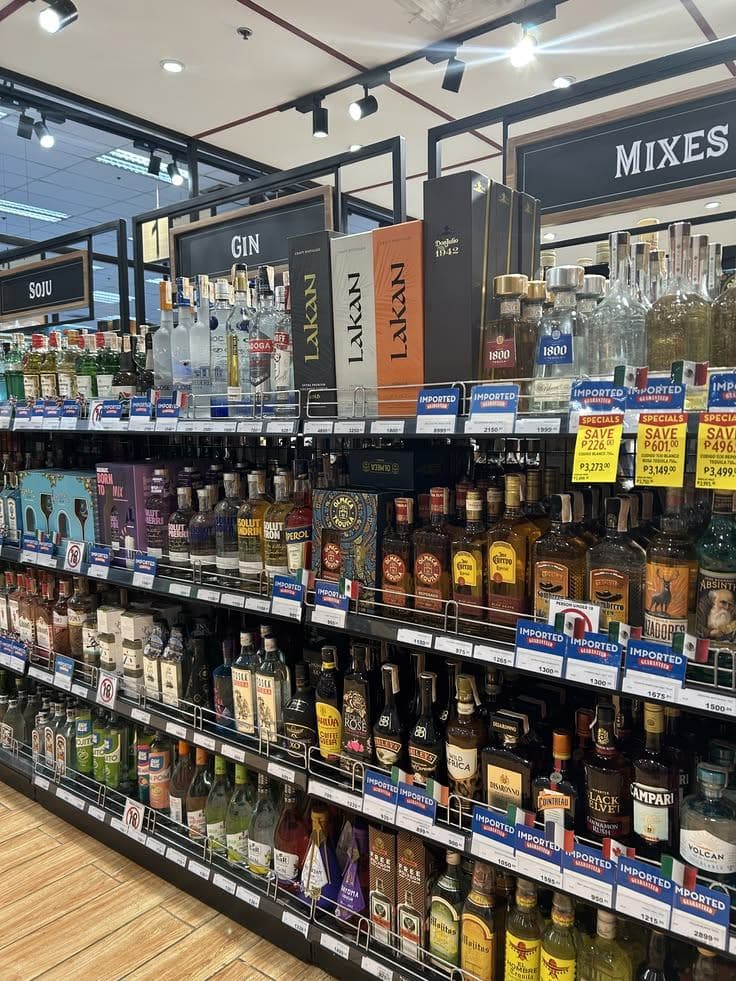
Alco-Bev
A Regulated Consumer Category Where Financial Structure Becomes Mission-Critical
Within Consumer Products, Alco-Bev represents a fundamentally differently operating environment — shaped by regulation-heavy distribution, excise-driven compliance systems, and capital-intensive scale economics.
Unlike typical consumer businesses, growth in this category is tightly coupled with regulatory navigation, working capital discipline, and multi-jurisdictional operating complexity.
FundVice has created impact within this segment where financial architecture must be designed around structure.
Related industries
Adjacent Domains Where We Operate



Consumer Businesses Don’t Fail From Demand Constraints. They Fail From Financial Structure Gaps.
Whether you are scaling across channels, expanding distribution, or preparing for a capital event, your finance function determines how far and how cleanly you can grow.
FundVice exists to close that gap.